
Bare, Muddy Spots Where Grass Won't Grow? Sod vs. Overseeding for a Fast Central Illinois Fix
QUICK ANSWER: Sod is the faster choice for a bare, muddy spot because it covers the ground with living, rooted turf the same day, which stops mud from tracking into the house and holds soil in place almost immediately. Overseeding is slower, usually needing five to ten days to sprout and three to four weeks to fill in, but it blends more naturally into an existing lawn and works with the grass already growing around the bare patch. Neither one fixes a spot that stays wet and muddy for a different reason: heavy clay soil that will not drain. In Central Illinois, that underlying drainage problem often has to be addressed first, or whichever method you choose will eventually thin out again in the same low spot.
You notice it every time you cut across the yard: a worn, dark patch near the downspout or along the path to the garage that never quite dries out. After a spring storm it turns to soup, tracks onto the patio, and a week later it is still bare dirt while the rest of the lawn has greened up around it. By midsummer it has widened at the edges, and grass seed you scattered there in April never came up thick enough to matter.
That combination, bare ground and standing moisture, is common across Champaign, Urbana, and the rest of Central Illinois, where heavy clay sits just under a thin layer of topsoil in most yards. The question homeowners usually bring us is simple: lay sod over it, or seed it and wait? The honest answer depends on how the spot is behaving, how much time you have, and whether the mud is a lawn problem or a drainage problem wearing a lawn's clothing.
Why bare spots turn into mud in the first place
Before comparing sod and seed, it helps to understand what is actually happening under a bare, wet patch. Central Illinois clay soil is dense and fine-grained, and once it becomes compacted from foot traffic, mower wheels, or construction fill, water has nowhere to go. Instead of soaking in, it sits at the surface, keeping the ground soft and preventing grass roots from getting the oxygen they need.
Compaction is usually the starting point. Thin turf over packed clay struggles first, then thins further under continued traffic, and eventually gives up altogether. Once that grass is gone, there's nothing left to soak up the water that keeps arriving.
A shallow dip near a downspout, a fence line, or the low corner of a yard collects runoff from a much bigger area than its own footprint. Heavy spring rain across Central Illinois can overwhelm a spot like that faster than any grass, sod or seed, can keep up with.
Shade plays a role too. A bare patch tucked under a tree canopy or against a fence dries out slower after every rain, so it stays soft and muddy longer between storms even after the rest of the yard has firmed back up.
And there's a fourth factor people rarely think about: foot traffic patterns that never change. If the shortest path from the driveway to the back door runs straight through the same six feet of lawn, grass never gets a real chance there no matter what you plant.
Sod and seed both need the same thing underneath them to survive: soil that can actually support root growth. Figure out which of these is driving your spot before you pick a fix.
How sod and overseeding actually work
Sod is mature turf grown on a farm, cut into rolls or slabs with roots and a thin layer of soil attached, then laid directly onto prepared ground. It gives a bare patch a finished, green surface within hours, and the existing root mass starts knitting into the soil below almost right away. In the growing conditions common to Champaign yards, sod is typically walkable in a light way within a few days, though it is best kept clear of heavy use for two to three weeks while the roots anchor firmly.
Seeding starts from bare ground and grass seed, worked into a prepared bed and watered until it germinates. It takes longer, both to sprout and to build a root system strong enough to handle normal wear, but it gives you a much wider choice of grass varieties suited to the specific spot, including blends bred for shade, drought tolerance, or heavier foot traffic.
Overseeding
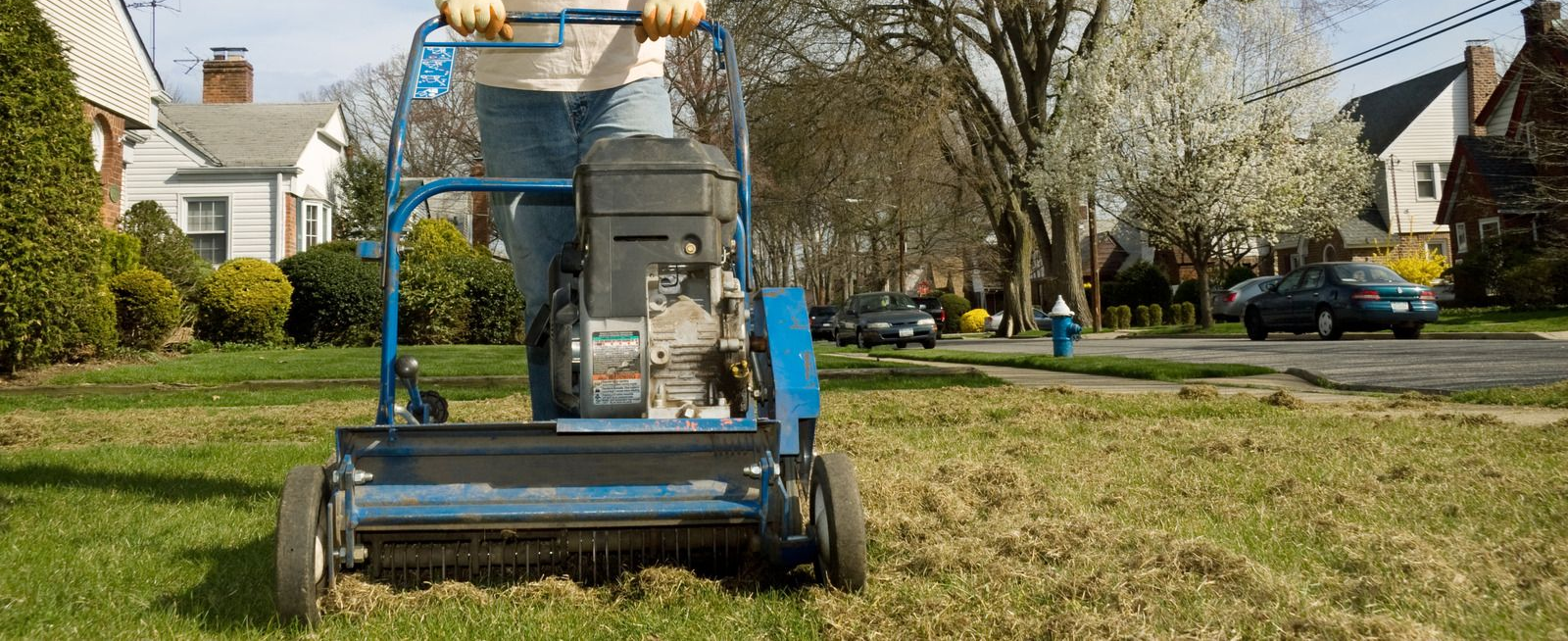
applies new seed directly onto or into an existing lawn, often alongside dethatching or light power-raking, to thicken thin turf or fill in bare pockets without tearing out what is already there. For a bare spot inside an otherwise healthy lawn, this is usually the more targeted version of seeding, since it blends new growth into the surrounding grass rather than starting from scratch.
When sod makes more sense for a bare, muddy spot
Sod earns its keep when time and erosion control matter more than picking a specialty grass blend.
If the bare patch sits along a walkway, a dog run, or anywhere people and pets cross every day, sod stops the mud problem the day it's installed, instead of asking you to rope off a seeded area for weeks. A bare spot on any kind of slope is another clear case: it sheds soil with every rain, and sod holds that soil in place the moment it's laid down. That matters most where erosion is already visible along a fence or a drainage swale.
Timing can push the decision too. Sod can generally go in through most of the growing season, while the best seeding window here is narrow. If you're staring at a muddy mess in the middle of July and don't want to wait until September, sod is the only one of the two that actually works right now.
When overseeding is the smarter fix
Overseeding tends to be the better fit when the bare area is really a symptom of a thinning lawn rather than one isolated dead zone.
If the muddy patch is just the worst example of a yard that's generally thinning out, overseeding the whole area gives a more even, blended result than patching a single sod piece into otherwise seeded turf. It also opens up options sod can't match. Seed isn't limited to whatever variety a sod farm happens to have ready to cut, so overseeding lets you match a shade-tolerant or higher-wear blend to exactly what that spot needs.
Cool-season grasses common here, Kentucky bluegrass, tall fescue, and perennial ryegrass, germinate and root best when soil temperatures and rainfall cooperate. That's the trade-off: overseeding rewards patience with a better long-term match, as long as you can work with the calendar instead of against it.
Timing matters more than the method you choose
Late summer into early fall, roughly mid-August through September, is consistently the strongest window for seeding or overseeding a cool-season lawn in Central Illinois. Warm soil combined with cooling nights and more dependable rainfall gives new seed a much better shot at establishing before winter, and there is less competition from summer weeds crowding out young grass. Spring seeding can work as a second choice, but it runs into a shorter window before summer heat and weed pressure set in.
Sod has more flexibility here. Because it arrives already rooted, it can generally go down through spring, summer, and fall, though extreme heat and hard freezes both make establishment harder and are best avoided when possible.
TIP: If your bare spot needs attention right now and it is the middle of summer, sod is usually the more forgiving choice. Seed struggles to establish in July and August heat, while sod's existing root system gives it a head start even in tougher conditions.
What has to happen before either method will hold
Sod and seed both fail in the same predictable way when the ground underneath them is not ready: they root shallow, stay soft and spongy after rain, and eventually thin right back out in the same spot. Soil preparation is where a bare, muddy patch actually gets fixed, not just covered over.
That starts with clearing debris and loosened compacted soil so roots have somewhere to go, then grading the immediate area so water moves across it instead of pooling. Where the bare spot sits in a genuine low point that collects runoff from a larger part of the property, regrading or improving drainage around it matters more than which grass-establishment method you pick, because new turf laid or seeded over a spot that still holds water will eventually struggle the same way the old grass did.
WARNING: Laying sod or spreading seed directly over compacted, poorly draining clay without correcting the grading first is one of the most common reasons a "fixed" bare spot returns within a year or two. The new grass buys time, but it does not solve a drainage problem sitting underneath it.
What the first few weeks look like either way
Once the ground is prepared and sod or seed goes down, the early care period is where most of the difference between success and a repeat bare spot happens.
New sod needs consistent moisture to keep the roots from drying out while they knit into the soil below, tapering off as it establishes. A gentle tug after roughly ten to fourteen days is a reliable way to check progress: if the sod resists being pulled up, it has rooted in and can be treated like the rest of the lawn.
New seed, whether it is a full reseed or overseeding into existing turf, needs light, frequent watering, often two to three times a day in short bursts, until germination takes hold. Overseeded spots typically show visible sprouting within five to ten days and reach fuller coverage over the following three to four weeks, with watering tapering back as the young grass matures.
Both
benefit from keeping heavy foot traffic, mower wheels, and pet play off the area during that establishment window. A spot that finally gets a chance to root undisturbed is far less likely to turn back into the same muddy patch by next spring.
Frequently Asked Questions
How do I know if my bare spot needs regrading instead of just sod or seed?
If the spot stays wet or muddy more than a day or two after rain, holds standing water, or sits in an obvious low point, the grade is likely the problem. New grass alone usually thins out again there.
Can I mix sod and overseeding in the same yard?
Yes. It's common to sod a specific problem area like a muddy path or erosion-prone slope while overseeding the rest to thicken thinner turf, as long as seed and sod varieties are reasonably matched.
Will grass seed grow directly in Central Illinois clay soil?
It can, but germinates and roots more reliably when the top few inches of clay are loosened and improved with organic matter first. Seed dropped onto hard, compacted clay tends to wash away or struggle to root.
How soon can I walk on a bare spot after sod or overseeding?
Sod tolerates light foot traffic within a few days, though heavy use should wait two to three weeks. Overseeded areas need more restraint, since young seedlings and shallow roots are easily uprooted for several weeks.
What grass types handle bare, muddy Central Illinois spots best?
Kentucky bluegrass, tall fescue, and perennial ryegrass are the most common cool-season varieties, with blends leaning toward shade tolerance, drought tolerance, or wear resistance. Matching the blend to specific conditions matters more than one variety.
Is fall or spring the better time to fix a bare spot with seed?
Late summer into early fall is the stronger window, since warmer soil, cooler nights, and steadier rainfall help seed establish before winter. Spring works as a second option, but with a shorter window before summer heat.
Reading the Spot Before You Fix It
A bare, muddy patch is telling you something about what is happening under the surface, not just above it. Sod answers the moment, overseeding answers the season, and grading answers the water, and most stubborn spots need some combination of the three rather than a single quick fix. Chris & Company, Inc. has spent 30 years learning exactly which combination Champaign, Illinois, yards actually need.
Taking a few extra minutes to figure out which one your yard actually needs is what keeps that same patch from reappearing next spring. A bare spot fixed without addressing what's underneath it is a bare spot on borrowed time. Get the drainage, the grading, and the
grass method
right together, and that muddy corner finally stops being the one part of the yard you have to think about every time it rains.